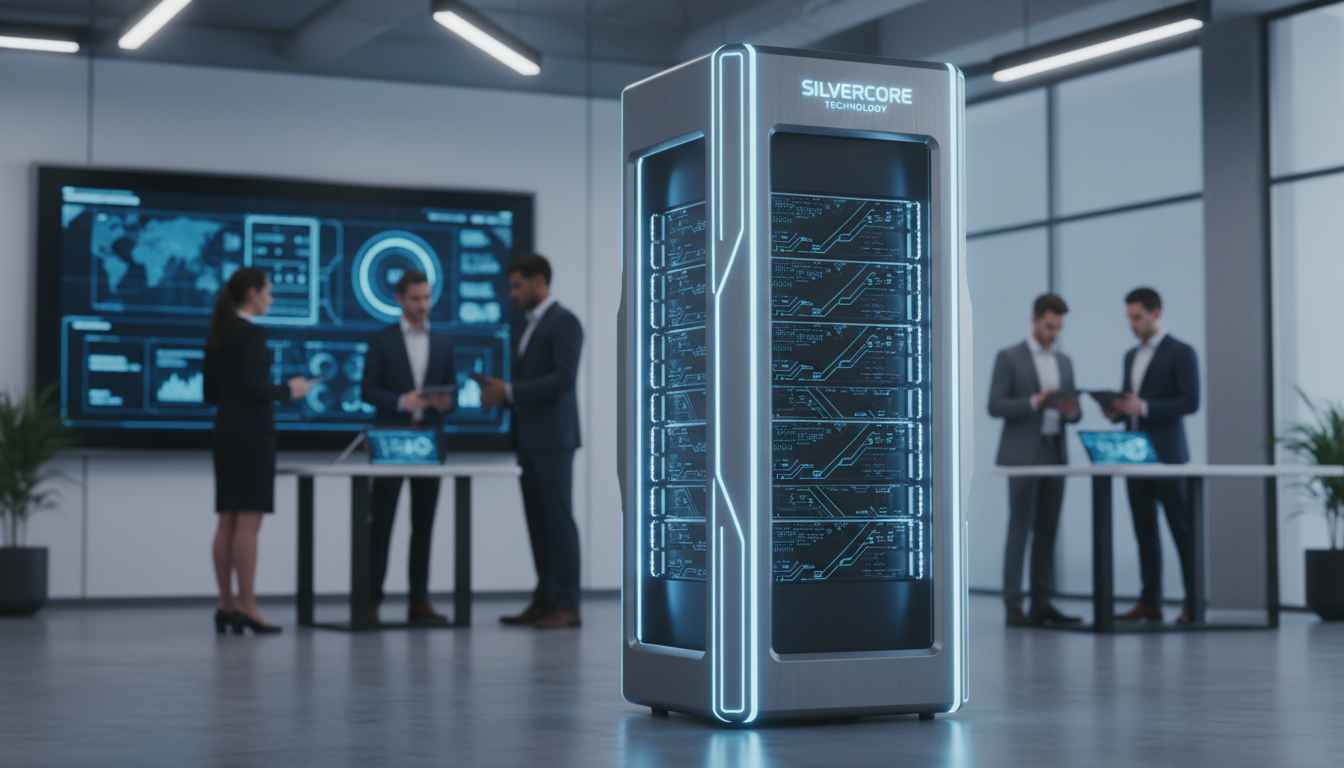
Remember the sleek, almost futuristic interface in *Minority Report*, where Tom Cruise navigates a wall of glowing data with mere gestures? That cinematic vision once seemed distant, a fantasy reserved for science fiction. Yet today, walking through the corridors of modern enterprise IT, I realize that the reality of advanced technology – specifically silvercore technology – has edged strikingly close to that imagined future. My transition from traditional IT frameworks to silvercore wasn’t sudden. It was a meticulously considered journey, catalyzed by inefficiencies, fragmented workflows, and an incessant hunger for scalability.
For years, I was embedded in legacy systems, managing servers and software that seemed to creak under their own weight. We dealt with redundancy, slow deployment cycles, and mounting security concerns. As I explored emerging solutions, silvercore technology repeatedly surfaced as a paradigm shift. Unlike conventional stacks, silvercore isn’t merely a tool – it’s a framework that redefines core infrastructure design and optimizes operational agility.
Before diving deeper, I want to underscore that embracing silvercore technology is not a casual decision. Enterprise adoption involves meticulous planning, consultation with experts, and a thorough assessment of existing workflows. For those curious about professional-grade implementations, I recommend exploring Itransition, a company that has consistently guided organizations through complex technology transitions.
From Frustration to Curiosity
It all began with frustration. Our cloud deployments were sluggish, integrations inconsistent, and maintenance cycles expensive. Traditional monolithic architectures seemed increasingly ill-suited for the demands of modern enterprise agility. I remember the night I stayed late troubleshooting an unexpected downtime incident. The servers were operational, yet the applications kept failing due to poorly synchronized data streams. That was the tipping point.
Curiosity drew me to silvercore technology. The term itself promised a core system designed for resilience and seamless integration. Unlike traditional architectures, silvercore emphasizes modularity, real-time adaptability, and intrinsic security protocols. Its design principles resonated with my need for efficiency without compromising control over complex IT environments.
Understanding Silvercore Technology
At its essence, silvercore technology is a hybrid infrastructure model that integrates hardware and software layers into a cohesive, self-optimizing system. It prioritizes interoperability, allowing disparate applications to communicate effectively while maintaining rigorous security standards. Data flows through well-defined channels, enabling predictive analytics and automated decision-making without the constant need for human intervention.
From an operational standpoint, silvercore transforms deployment cycles. Rolling updates are executed with minimal downtime, and system anomalies are often self-correcting. Its architecture is designed to scale horizontally, meaning as demands increase, additional modules or resources can be integrated seamlessly. This feature alone is a game-changer for enterprises grappling with fluctuating workloads.
Decision Matrix: Choosing Silvercore Technology
| If | Then |
|---|---|
| Your legacy infrastructure frequently fails under high load | Consider migrating to a silvercore system to enhance stability and scalability |
| You require seamless integration between multiple software platforms | Silvercore technology provides modular connectivity and standardized APIs |
| Your enterprise demands near-zero downtime for critical services | Silvercore’s self-healing and predictive monitoring can significantly reduce outages |
| Cost of maintenance and manual oversight is rising | Automated orchestration and centralized management reduce overhead |
| You want real-time analytics and decision-making capability | Silvercore’s integrated data pipelines support advanced analytics and AI-driven insights |
Implementation Insights
Transitioning to silvercore technology is a strategic investment rather than a mere upgrade. Implementation starts with a thorough audit of existing infrastructure. Identifying redundant systems, bottlenecks, and security vulnerabilities ensures that the silvercore framework is tailored effectively. Integration isn’t always plug-and-play; it requires mapping workflows, defining dependencies, and configuring modules for optimal performance.
Security, however, is where silvercore particularly shines. Unlike conventional systems that rely heavily on external patches, silvercore incorporates layered security protocols at its core. This approach drastically reduces the surface area for potential attacks and provides real-time threat monitoring. For enterprises handling sensitive data, this feature alone justifies the migration effort.
Potential Drawbacks
No technology is without limitations. Silvercore, despite its robust architecture, requires initial capital investment and skilled personnel for implementation. Organizations with constrained budgets or small-scale operations might find the overhead challenging. Moreover, early adoption may encounter compatibility issues with legacy applications not designed for modular integration. Consulting with experienced professionals is critical to mitigating these risks.
The Transformation Effect
Since integrating silvercore technology, the impact on operations has been palpable. Deployment cycles shortened from weeks to days, data discrepancies became virtually non-existent, and predictive analytics provided actionable insights that were previously unattainable. Beyond efficiency, it fostered a culture of proactive problem-solving – teams could anticipate potential failures and address them before they escalated.
The analogy to *Minority Report* is more than poetic. Just as the film’s interface allowed Tom Cruise to foresee events, silvercore technology equips enterprises with foresight – real-time visibility and actionable intelligence. The difference is profound: we aren’t just reacting to failures; we are preventing them, optimizing processes, and enabling scalable growth.
Who Should Avoid This
While silvercore technology offers numerous advantages, it isn’t suitable for every organization. Small startups with minimal IT complexity may find conventional cloud solutions more cost-effective. Similarly, teams lacking the technical expertise to manage modular architectures could encounter operational bottlenecks. Enterprises should conduct a rigorous feasibility study, weighing the benefits against implementation complexity, before committing.
Final Reflections
Quitting traditional IT frameworks for silvercore technology was not an impulsive decision; it was a deliberate pivot driven by necessity and vision. The journey involved extensive learning, consultation, and recalibration of existing systems. Today, the benefits are clear: operational efficiency, predictive management, enhanced security, and scalable growth.
Silvercore technology represents more than an infrastructure choice – it embodies a philosophy of forward-looking, resilient, and intelligent enterprise IT. For those ready to embrace the future, the pathway is clear. For those still weighing options, remember that thoughtful planning, professional consultation, and a clear understanding of your organizational needs remain the keys to successful adoption.