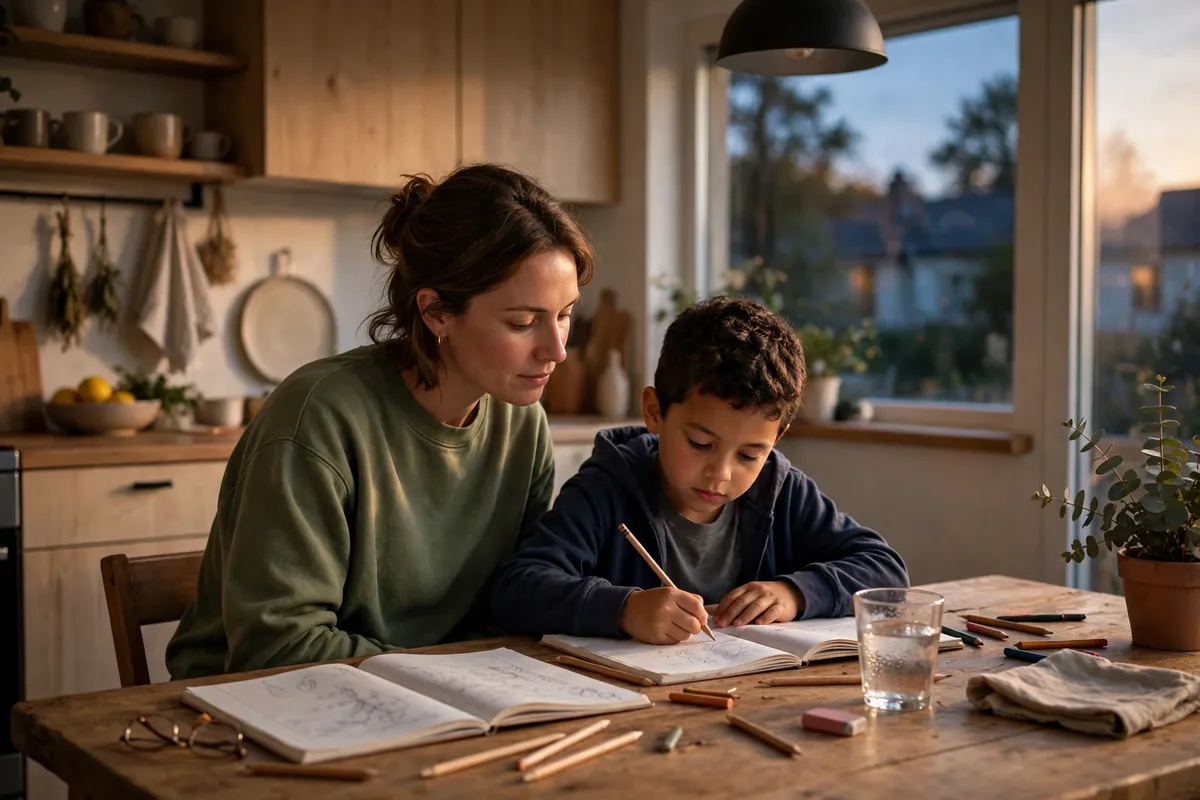
Every parent wants their child to pick up a book because they want to, not because they have to. The good news is that a love of reading is rarely something children are simply born with. It grows out of small, everyday experiences: the stories they hear, the books within reach, and the way the adults around them treat reading. If you want to encourage a love of reading in your child, you do not need expensive programmes or a home library worthy of a school. You need consistency, choice, and a little patience.
This guide walks through practical, realistic ways to make reading a normal and enjoyable part of family life, whatever your child’s age or current attitude to books.
Why Reading for Pleasure Matters
Children who read for pleasure tend to do better across the whole curriculum, not just in English. Reading builds vocabulary, background knowledge and concentration, and it strengthens the imagination in a way few other activities can match. It also develops thinking skills: following a plot, predicting what happens next and understanding why characters behave as they do are all forms of analysis. Our guide to helping children develop critical thinking and analytical skills at home explores this connection in more depth.
Just as importantly, reading for pleasure is a calm, screen-free way for children to relax. A child who sees books as a treat rather than a chore has a lifelong source of entertainment and learning that costs very little.
Start by Letting Your Child Choose
The fastest way to kill a child’s interest in reading is to force books on them that they find boring. Adults rarely finish novels they dislike, yet children are often expected to push through anything put in front of them. Instead, let your child browse and pick. Comics, joke books, football annuals, magazines and non-fiction about dinosaurs or space all count as reading.
Choice matters because it gives children ownership. A book they selected themselves is a book they are motivated to open. If you are unsure where to start, visit a library together and let them fill a bag. Librarians are excellent at matching reluctant readers with stories that hook them, and borrowing is free, so there is no pressure if a book turns out not to be a hit.
Build Reading Into the Daily Routine
Habits form around routines, and reading is no different. Ten or fifteen minutes at the same time each day, perhaps before bed or after breakfast, quickly becomes something children expect and even ask for. Younger children benefit from being read to long after they can decode words themselves, because listening to a fluent reader builds their understanding of how stories sound and flow.
Reading fits naturally alongside your other family routines. If you are already working on structure at home, our guide on how to build a homework routine that works for your family shows how small, consistent habits support each other. A short reading slot at the end of homework time, for example, turns books into the reward rather than another task.
Create a Reading Corner They Love
Children read more when books are visible and easy to reach. You do not need a dedicated room: a cushion in a quiet corner, a small shelf at child height, or even a basket of books near the sofa can work. Keep a few books in the car and in their bedroom too, so reading is an option whenever there is a spare moment.
Let your child help design the space. Choosing a cushion, a small lamp or a poster makes the corner feel like their place, and children protect and use spaces they feel ownership over. Rotate the books every few weeks so there is always something that looks new, even if it has been on the shelf before.
Be the Reader You Want Them to Become
Children copy what they see far more than what they are told. If they regularly see you reading a book, a newspaper or a magazine, they absorb the message that reading is something adults enjoy. Talk about what you are reading, too. Mention a funny scene, a surprising fact or a character you like, and ask your child about their book in return.
These conversations matter for language development as well. Discussing stories builds the same comprehension skills children use when they learn to read, understand and write texts like a native speaker, because talking about a text is how readers learn to think about it.
Match Books to Your Child’s Age and Stage
The right book at the right stage keeps confidence high. Very young children need sturdy board books and picture books with rhythm and repetition. Early readers do best with short chapters, plenty of illustrations and stories slightly below their frustration level, so reading feels easy and fun. Confident readers can be stretched with series books, which are powerful because each finished book pulls them towards the next one.
If a book is too hard, your child will guess, skip and switch off. A simple test: if they stumble on more than a few words on one page, the book is probably too difficult for independent reading right now, though it may still be perfect for you to read aloud together.
Simple Ways to Encourage a Love of Reading Every Day
Small moments add up. Try some of these:
- Ask your child to read signs, menus, recipes and instructions aloud in everyday life.
- Leave a new book somewhere they will discover it, like on their pillow.
- Let them stay up fifteen minutes later if they are reading in bed.
- Start a family book chat at dinner, where everyone shares one thing from what they are reading.
- Use praise that names the effort, not just the result. Our guide to supporting your child’s growth through positive reinforcement explains why this works so well.
Reading also strengthens wider learning skills. Following a story’s problem and resolution supports the same thinking your child uses in our guide to supporting problem-solving and decision-making skills early, and older children can use techniques like mind mapping to organise ideas from non-fiction books they enjoy.
When Reading Feels Like a Struggle
If your child actively resists reading, stay calm and curious rather than turning it into a battle. Sometimes the issue is difficulty: they may need glasses, or they may be finding decoding genuinely hard, in which case talk to their teacher early. Sometimes the issue is simply that they have not met the right book yet. Graphic novels, audiobooks paired with the printed text, and books linked to their favourite films or games are all legitimate bridges.
Above all, keep reading low-pressure. The goal is a child who reaches for a book in ten years’ time, not one who wins an argument about tonight’s chapter.
Helping children fall in love with reading is one of the most valuable gifts a parent can give. Start small, stay consistent, and let your child’s interests lead the way. The habit you build now will support their learning, and their enjoyment, for life.