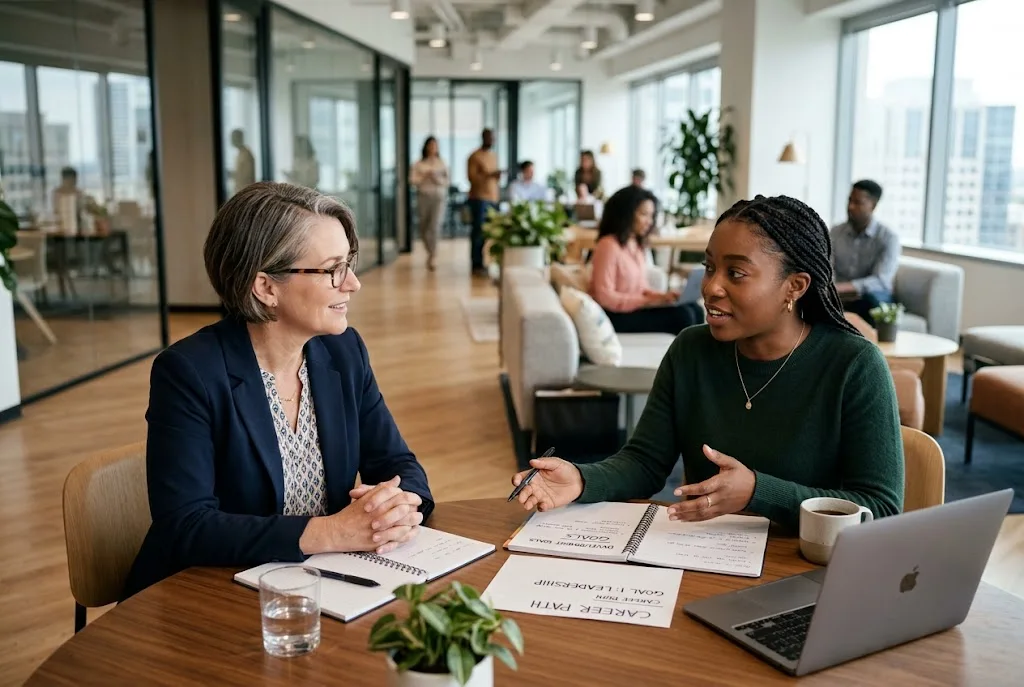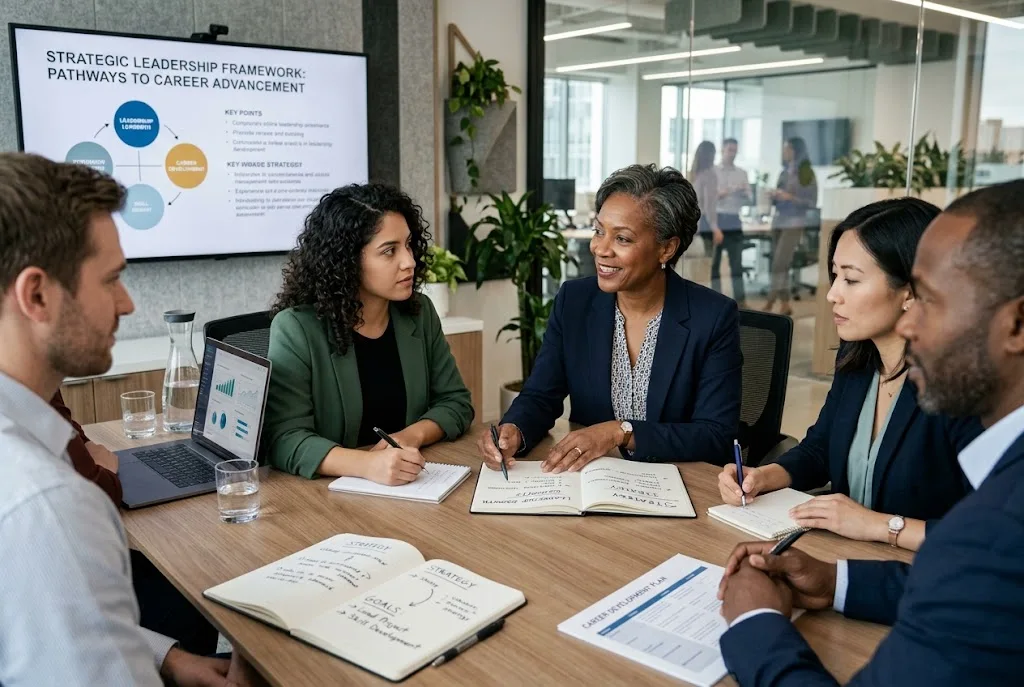
Employee career development is the process of helping workers build skills, gain experience, understand career opportunities, and prepare for future responsibilities. When organizations make development part of the workplace experience, employees can see how their current work connects with longer-term professional goals.
Career development is not limited to promotions. It can involve improving performance, learning new skills, taking on challenging assignments, developing leadership capabilities, exploring different roles, or becoming a specialist in a particular area. A structured approach can help employees and employers make these opportunities more intentional.
For organizations, employee development can also support a stronger internal workforce. Instead of relying entirely on external hiring for future roles, employers can help existing employees build capabilities that may become valuable as business needs change.
What Is Employee Career Development?
Employee career development refers to the ongoing process of supporting an employee’s professional learning, skill development, career planning, and progression within or beyond their current role.
The process can include formal training, mentoring, coaching, job shadowing, project assignments, professional development courses, leadership opportunities, career conversations, and individual development plans.
A strong approach recognizes that employees have different strengths and career interests. Someone may want to become a manager, while another employee may prefer to deepen technical expertise. Effective development should provide room for both directions.
Why Employee Career Development Matters
The workplace continues to change as organizations adopt new technologies, processes, services, and operating models. Employees may need to develop new capabilities to remain effective as their responsibilities evolve.
Employee development can also improve engagement with work by giving people a clearer understanding of how they can progress. When employees know which skills and experiences can support their goals, professional development becomes more purposeful.
For employers, development can strengthen internal capabilities and create a more prepared workforce. It can also help managers identify employees who are ready to take on additional responsibilities.
The U.S. Bureau of Labor Statistics provides information about occupations, including education, training, experience, and other career-related requirements. Employees and employers can use resources such as the Occupational Outlook Handbook when researching career paths and skill requirements.
Employee Career Development Program: What Should It Include?
An employee career development program provides a structured framework for helping workers develop professionally. The exact format will vary by organization, but several elements can make a program more useful.
Career Goals
Employees should have an opportunity to discuss what they want to achieve. Goals may include improving current performance, preparing for management, gaining specialist expertise, moving into another department, or developing transferable skills.
Skills Assessment
A skills assessment can help identify strengths and development needs. Employees can compare their current capabilities with the skills required for their desired responsibilities.
Learning Opportunities
Organizations can provide access to courses, workshops, mentoring, coaching, certifications, learning resources, or other development activities that address identified needs.
Practical Experience
Learning becomes more valuable when employees can apply it. Projects, cross-functional assignments, job rotations, and stretch responsibilities can provide opportunities to practice new capabilities.
Progress Reviews
Development goals should be revisited regularly. Managers and employees can discuss progress, challenges, new opportunities, and changes in career direction.
How to Create an Employee Career Development Plan
An employee career development plan turns general career ambitions into specific actions. It does not need to be complicated, but it should provide enough structure to guide development.
A useful plan can begin with the employee’s current position and career goals. From there, the employee and manager can identify the skills and experiences needed to move forward.
A simple development plan can include:
- Current role: Identify the employee’s responsibilities and existing capabilities.
- Career objective: Define the type of role, responsibility, or expertise the employee wants to pursue.
- Strengths: Identify skills the employee already demonstrates effectively.
- Development gaps: Determine which capabilities require improvement.
- Development actions: Select relevant courses, projects, mentoring, practice, or other learning activities.
- Application opportunities: Identify ways to use new skills in real workplace situations.
- Review dates: Set regular points for evaluating progress and adjusting goals.
The plan should remain flexible. Career interests and organizational priorities can change, so development plans should be updated when circumstances change.
Career Development for Employees at Different Stages
Career development for employees should reflect their experience and responsibilities. A single development pathway may not work equally well for everyone.
New Employees
Employees who are early in their careers may need support with workplace communication, technical skills, organization, collaboration, and understanding professional expectations.
Managers can help by providing clear feedback and giving newer employees manageable opportunities to take ownership.
Mid-Career Employees
Mid-career professionals may focus on specialization, leadership, project management, strategic thinking, or preparing for a career transition.
At this stage, employees can benefit from development opportunities that expand their responsibilities and expose them to different parts of the organization.
Experienced Employees
Experienced professionals can continue developing through advanced expertise, mentoring, strategic responsibilities, leadership, and knowledge-sharing opportunities.
Organizations should not assume that experienced employees have finished developing. Their knowledge can become even more valuable when combined with new capabilities and changing business needs.
Developing Staff Skills Through Practical Experience
Developing staff skills is more effective when employees have opportunities to use what they learn. Formal courses can provide knowledge, but practical experience helps employees understand how to apply that knowledge in real situations.
Organizations can create practical development opportunities through:
- Cross-functional projects
- Job shadowing
- Temporary project leadership
- Mentoring relationships
- Peer learning
- Stretch assignments
- Problem-solving initiatives
- Internal presentations
- Process improvement projects
- Rotational responsibilities
These experiences can help employees develop capabilities while continuing to contribute to the organization.
The Importance of Employee Development
The importance of employee development becomes particularly clear when organizations need employees to adapt to new responsibilities. A workforce that continues learning can be better prepared for changing expectations.
Development can also help employees recognize opportunities within the organization. Someone who begins by improving communication skills may later become interested in project leadership. Another employee may discover a talent for analysis and decide to pursue a more specialized role.
By supporting these possibilities, organizations can help employees build careers rather than viewing each position as an isolated job.
Connect Employee Development With Workplace Performance
Employee development should support both future career goals and present performance. A development activity becomes more useful when employees can apply it to actual responsibilities.
For example, an employee who wants to improve project management could take a course and then coordinate a small workplace project. The experience provides an opportunity to practice planning, communication, prioritization, and problem-solving.
Similarly, someone interested in leadership could mentor a newer colleague or coordinate a team initiative. These activities allow employees to develop capabilities while producing useful workplace experience.
This connection between learning and performance is one reason structured career development programs can be valuable to organizations.
How Managers Can Support Employee Career Development
Managers play a central role in turning development plans into practical experiences. They often have direct knowledge of an employee’s strengths, responsibilities, performance, and potential development opportunities.
Regular conversations can help managers understand what employees want to learn and where they hope to progress. These conversations should not happen only during annual performance reviews.
Managers can ask questions such as:
- Which skills would you like to strengthen?
- What type of work would you like more experience with?
- What responsibilities would you like to prepare for?
- Which part of your current role would you like to improve?
- What support would help you reach your development goals?
These questions can make professional development a normal part of workplace communication.
Employee Development Goals Should Be Specific
An employee development goal is more useful when it describes a specific capability or outcome. A goal such as “become better at work” does not provide enough direction.
A stronger goal might be to improve presentation skills by leading several team presentations, complete a relevant certification, develop project coordination skills through a cross-functional assignment, or prepare for a supervisory role by taking on appropriate leadership responsibilities.
Specific goals also make progress easier to evaluate. Employees can determine whether they completed the activity and, more importantly, whether they can now demonstrate the capability in practice.
Connect Employee Career Development With Career Advancement
Professional development can help employees prepare for advancement, but organizations should avoid presenting development as an automatic promise of promotion.
Instead, employees should understand which skills and experiences are generally associated with future roles. Managers can then help employees build those capabilities while being transparent about available opportunities.
Employees who want to improve their advancement prospects can also review how to get promoted at work and consider how current development activities can prepare them for greater responsibility.
This approach keeps career development focused on readiness rather than simply waiting for a title change.
Build Career Learning Into Everyday Work
Career development does not always require separate training sessions. Everyday work can provide opportunities to learn when employees are encouraged to reflect, experiment, collaborate, and take ownership.
A manager might ask an employee to lead a meeting, analyze a recurring problem, train a colleague, present project findings, or participate in a cross-functional initiative.
These activities can turn ordinary responsibilities into development experiences. The key is to connect the assignment with a specific skill or career objective.
How Mentoring Supports Employee Development
Mentoring can provide employees with practical guidance from someone who has relevant experience. A mentor can share lessons learned, explain professional expectations, provide perspective on challenges, and help an employee think through career decisions.
Mentoring does not need to be limited to formal programs. Organizations can encourage experienced employees to support colleagues through knowledge sharing and professional guidance.
For mentoring to be effective, employees should take an active role. They can prepare questions, discuss development goals, request feedback, and follow through on agreed actions.
Use Feedback as Part of Employee Development
Feedback is an important part of professional learning. Employees need to understand what they are doing well and which behaviors or skills could be improved.
Constructive feedback should lead to specific actions. If an employee needs to improve communication, for example, the development plan could include presentation practice, clearer written updates, or opportunities to lead discussions.
Managers should also recognize progress. Positive feedback can reinforce effective behaviors and help employees understand which capabilities are becoming strengths.
How Organizations Can Measure Employee Development
Organizations should evaluate whether development initiatives are producing meaningful outcomes. Simply tracking course attendance may not provide enough information.
Useful measures can include progress toward development goals, application of new skills, increased responsibility, completion of relevant projects, internal movement, employee feedback, and demonstrated improvements in workplace capabilities.
Managers can also use development conversations to assess whether employees are applying what they have learned and what additional support may be required.
Common Challenges in Employee Career Development
Organizations can face several challenges when building development programs. One is lack of time. Employees may struggle to participate when development is treated as an extra task rather than part of their work experience.
Another challenge is unclear career pathways. Employees may be encouraged to develop without understanding which capabilities could support future opportunities.
Development can also become ineffective when training is disconnected from practical application. Employees need opportunities to practice new skills if organizations want learning to translate into workplace capability.
Finally, managers may need guidance themselves. Supporting employee development requires communication, feedback, goal-setting, and an understanding of available organizational resources.
Employee Career Development and Organizational Learning
Individual employee development works best when it connects with broader organizational learning. When employees develop capabilities that support both their career goals and organizational priorities, development can create value at multiple levels.
Organizations can strengthen this connection by offering structured training, mentoring, workshops, career conversations, and opportunities for practical application.
The goal should not be to make every employee follow the same path. Instead, organizations can create a framework that gives employees multiple ways to develop while maintaining clear expectations.
Create a Culture That Encourages Growth
A strong employee development culture is built through everyday behavior. Leaders can encourage learning by asking employees about their goals, recognizing improvement, supporting appropriate experimentation, and making development conversations part of normal management.
Employees also contribute to the culture by taking ownership of their learning, seeking feedback, sharing knowledge, and looking for ways to improve.
When both sides participate, development becomes less dependent on occasional training events and more integrated into the employee experience.
Final Thoughts on Employee Career Development
Employee career development provides a structured way for organizations and employees to connect learning, workplace performance, skill building, and future career opportunities. It can include development plans, training, mentoring, practical projects, feedback, and regular career conversations.
The strongest approach recognizes that employees have different goals and strengths. Some may want to pursue leadership, while others may prefer specialist expertise or a different career pathway. A flexible development strategy can support these differences while helping the organization build useful capabilities.
For employees, the most important step is to take an active role in development. Identify meaningful goals, build relevant skills, seek feedback, and look for opportunities to apply what you learn. For employers, the priority is creating an environment where those efforts are supported with clear pathways, useful resources, and practical opportunities.
When employee growth becomes part of everyday work, organizations can build stronger skills while employees gain greater clarity and confidence about their professional futures.